Well, I wasn't a finalist for the Slapering Hol annual chapbook competition. Good experience - both in the paring down of the book to its shortest incarnation yet, and in working with an accomodating contest staff. This is rejection #5 in a little over 2 years, but the guidance I received from Teresa Leo a few weeks ago at the annual Celebration of NJ Journals was not to worry until year 8 - it took her 10 to get The Halo Rule accepted.
Lately I've been wondering if the manuscript I'm shopping around isn't better suited to be a second book. It's not that I'm losing confidence in the poems (though the last couple have contest preps have helped me be a little more brutal about what's "good enough"), but that it's not an unconventional enough theme to be memorable in the harsh and immediate process of a contest screen. My new project is more "quirky", more attention-grabbing in that it's a different kind of presentation on a historical subject many people recognize but few actually understand, and it seems to me therefore more likely to survive the first cut - the one that ends on the first page.
Do first books tend to be more unusual than next books? And what, then, is the point of second book contests? A couple more things to mull while reworking for the September deadlines.
PS: Diane Lockward recently made a series of postings listing journals that read over the summer, for those of you not taking a vacation from the grind.
Tuesday, July 22, 2008


Sunday, July 13, 2008
The Bronze Age of Poetry?
It’s not that the SoQ poets, then and now, were bad writers – I think you can demonstrate that it’s objectively not the case. But they didn’t create change for poetry in their poetry...
The SoQ (School of Quietude) reference will clearly indicate to anyone who has clicked through the links at the right that this though originates with Ron Silliman. I read his blog religiously for the same reason that I used to fiddle with my father's slide rule: I knew there had to be great ways to leverage it if I could come to understand it.
Before you run away, note that this juxtaposition isn't really that far a stretch. Many replies (to this and any number of his prior posts) criticize Silliman for (1) using labels to categorize poets and (2) implying an absence of talent in the SoQ category. In this short excerpt he has, I think beyond dispute, dispelled both complaints.
First, he clearly says here that there are poets in the derided category that have talent. If you read through his posts, he sometimes names poets whose work he doesn't care for, but who display strong poetic craft. And more importantly, he's made it clear - for me, at least - that his purpose for categorizing is to create a kind of timeline for poetry: overlapping bands that, taken together, clearly illustrate an evolution of poetic craft and purpose. Independently, the terms have some, but greatly diminished and incomplete value, which explains why, when used independently, they lead to misunderstandings and bad feelings.
Look at an analog: Take three terms which describe the evolution of technology preceding the modern age: The Stone Age, The Bronze Age, and The Iron Age. What do the terms do? Create a memorable structure into which to organize basic commonalities (eg: the use of stone tools, the absence of metal forming and metalworking technologies, etc.), not a complete sets of characteristics (doesn't try to capture social structure, regional differences, etc.), and no finite opinions on start/end or on the quality of those who executed within its limits (excellence of workmanship within the limits of the age, etc."). It was possible to have brilliant stone workers who did not, out of ignorance or will, practice metalworking. However, a society that refused to accept and integrate the new technology - as part of its evolution - was likely to die off.
Where my analogy falls apart is that the transitions between Stone, Bronze, and Iron - or more dramatically, the ages themselves - were too far long for individual members of society to feel any pressure from the transition. Silliman seems to be searching for the artists who are clearing the path for the next steps on the evolutionary path in areas where the ages of the art are shorter than the lifespans of their practitioners. Pejorative implications notwithstanding, the application of a term merely identifies a form of the art in which that groundbreaking seems, in general to be absent.
Might there be examples like this in the sciences? Imagine an advanced practitioner, schooled and studied in the branches that have come before, making public the results of a meta-analysis of unprecedented size along with results of her own research and theories. I wonder if such a figure would have more respect inside or outside her discipline. I wonder if fellows would tend to compare the conclusions of the meta analysis with the direction of the research to ask "is this scientist following a consistent and logical direction" or to form opinions of the research and then skim the analysis for bits to quibble with. I wonder.
Anyway, I'm probably way over the top (or drilled down way too deep - your choice) with this discussion. But this idea of classification for consideration is so essential to a technologist's mindset (and I am certainly a technologist first) that I'm regularly fascinated by the dismissal of interesting ideas because they require classifications to commit them to paper.
A quick to those lamenting the impending All-Star Break: If you like, I can rewrite this post using the dead ball era instead of the Stone Age. Less universal, I dare say, but possible....
The SoQ (School of Quietude) reference will clearly indicate to anyone who has clicked through the links at the right that this though originates with Ron Silliman. I read his blog religiously for the same reason that I used to fiddle with my father's slide rule: I knew there had to be great ways to leverage it if I could come to understand it.
Before you run away, note that this juxtaposition isn't really that far a stretch. Many replies (to this and any number of his prior posts) criticize Silliman for (1) using labels to categorize poets and (2) implying an absence of talent in the SoQ category. In this short excerpt he has, I think beyond dispute, dispelled both complaints.
First, he clearly says here that there are poets in the derided category that have talent. If you read through his posts, he sometimes names poets whose work he doesn't care for, but who display strong poetic craft. And more importantly, he's made it clear - for me, at least - that his purpose for categorizing is to create a kind of timeline for poetry: overlapping bands that, taken together, clearly illustrate an evolution of poetic craft and purpose. Independently, the terms have some, but greatly diminished and incomplete value, which explains why, when used independently, they lead to misunderstandings and bad feelings.
Look at an analog: Take three terms which describe the evolution of technology preceding the modern age: The Stone Age, The Bronze Age, and The Iron Age. What do the terms do? Create a memorable structure into which to organize basic commonalities (eg: the use of stone tools, the absence of metal forming and metalworking technologies, etc.), not a complete sets of characteristics (doesn't try to capture social structure, regional differences, etc.), and no finite opinions on start/end or on the quality of those who executed within its limits (excellence of workmanship within the limits of the age, etc."). It was possible to have brilliant stone workers who did not, out of ignorance or will, practice metalworking. However, a society that refused to accept and integrate the new technology - as part of its evolution - was likely to die off.
Where my analogy falls apart is that the transitions between Stone, Bronze, and Iron - or more dramatically, the ages themselves - were too far long for individual members of society to feel any pressure from the transition. Silliman seems to be searching for the artists who are clearing the path for the next steps on the evolutionary path in areas where the ages of the art are shorter than the lifespans of their practitioners. Pejorative implications notwithstanding, the application of a term merely identifies a form of the art in which that groundbreaking seems, in general to be absent.
Might there be examples like this in the sciences? Imagine an advanced practitioner, schooled and studied in the branches that have come before, making public the results of a meta-analysis of unprecedented size along with results of her own research and theories. I wonder if such a figure would have more respect inside or outside her discipline. I wonder if fellows would tend to compare the conclusions of the meta analysis with the direction of the research to ask "is this scientist following a consistent and logical direction" or to form opinions of the research and then skim the analysis for bits to quibble with. I wonder.
Anyway, I'm probably way over the top (or drilled down way too deep - your choice) with this discussion. But this idea of classification for consideration is so essential to a technologist's mindset (and I am certainly a technologist first) that I'm regularly fascinated by the dismissal of interesting ideas because they require classifications to commit them to paper.
A quick to those lamenting the impending All-Star Break: If you like, I can rewrite this post using the dead ball era instead of the Stone Age. Less universal, I dare say, but possible....
Wednesday, July 02, 2008
Another Writer Accidentally Talking About Poetry
Wil Wheaton, of whom it can no longer really be said "who is probably best known as Star Trek's Wesley Crusher", has long been making the transition from performer of other people's words (read: actor) to creator of his own words (read: writer). Wil has only recently turned his attention to fiction. Like Douglas Adams in yesterday's quote, Wil is acknowledging the mysterious - and "scary"! - element of creating words from nothing more than the absence of words.
Interestingly, Wheaton is skilled in acting, an artistry foreign and scary to many writers, yet admits to pre-performance jitters when reading his own work (read his piece on seeing David Sedaris). How deeply felt must be the need to write to face such fear producing AND sharing one's writings?
Tuesday, July 01, 2008
Douglas Adams, Poet
"...I don't know where ideas come from, or even where to look for them. Nor does any writer. This is not quite true, in fact. If you were writing a book on the mating habits of pigs, you'd probably pick up a few goodish ideas by hanging around in a barnyard in a plastic mac, but if fiction is your line, then the only real answer is to drink way too much coffee and buy yourself a desk that doesn't collapse when you beat your head against it.
I exaggerate, of course. That's my job."
Douglas Adams was such a poetic purveyor of fiction, I feel perfectly at ease applying any of his comments to poetry. The only other writer whose prose approaches the poetic unpredictability of Adams', whose next word is so infrequently the one you thought it was going to be, is Woody Allen.
I'm reading The Salmon of Doubt right now, being reminded how brilliant Adams could be. Also recently completed Ron Koertge's Shakespeare Bats Cleanup - which deserves its own entry and Goodreads treatment, to come soon.
I exaggerate, of course. That's my job."
Douglas Adams was such a poetic purveyor of fiction, I feel perfectly at ease applying any of his comments to poetry. The only other writer whose prose approaches the poetic unpredictability of Adams', whose next word is so infrequently the one you thought it was going to be, is Woody Allen.
I'm reading The Salmon of Doubt right now, being reminded how brilliant Adams could be. Also recently completed Ron Koertge's Shakespeare Bats Cleanup - which deserves its own entry and Goodreads treatment, to come soon.
Thursday, June 26, 2008
NJ Publishers In The News
What a happy surprise to open the paper this morning and see Ed Foster gracing the front of the Today section. My prolific former professor was featured along with other publishers of poetry in the Garden State. And it's not even April!
The featured publishers were Foster's Talisman House, Roxanne Hoffman's Poets Wear Prada, CavanKerry Press, and Barbara Worton's Great Little Books in Glen Rock (be diligent in your Google searching on the last one - there seem to be at least a half-dozen companies publishing in English under that name).
This is an eclectic set, by the way. I don't know if it was purposeful, but this article covers a huge spectrum in poetry.
As does my home state. For which I am grateful, as always.
The featured publishers were Foster's Talisman House, Roxanne Hoffman's Poets Wear Prada, CavanKerry Press, and Barbara Worton's Great Little Books in Glen Rock (be diligent in your Google searching on the last one - there seem to be at least a half-dozen companies publishing in English under that name).
This is an eclectic set, by the way. I don't know if it was purposeful, but this article covers a huge spectrum in poetry.
As does my home state. For which I am grateful, as always.
Tuesday, June 24, 2008
More Counting Down to Dodge
Father's Day, the end of the school year, and various other hobby-crowding obligations over, we're back to looking forward to Dodge. Today's featured reference is Jane Hirshfield. My favorite of her present-tense-dominated poems is "Mule Heart", which begins:
On the days when the rest
have failed you,
let this much be yours --
flies, dust, an unnameable odor,
the two waiting baskets:
one for the lemons and the passion,
one for all that you have lost.
She's not always so meditative, but I think she's much more effective when she is. Of all the returning "big name" poets, I'm most interested to hear what she has been working on.
On the days when the rest
have failed you,
let this much be yours --
flies, dust, an unnameable odor,
the two waiting baskets:
one for the lemons and the passion,
one for all that you have lost.
She's not always so meditative, but I think she's much more effective when she is. Of all the returning "big name" poets, I'm most interested to hear what she has been working on.
Saturday, June 21, 2008
A Minireview (and practice with more complexly formatted posts)
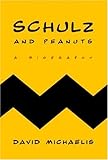 Schulz and Peanuts: A Biography by David Michaelis
My review
rating: 4 of 5 stars
A well-researched and thoughtful biography, this work by David Michaelis does not dwell on the spectacle of the Peanuts empire, but rather sees it through the eyes of its talented but flawed creator. This book provides some profound (if redundantly developed) insights into the person behind Peanuts, and shows with great clarity another layer with which to read Schulz's deceptively simple strips. Be warned: This is not a book for someone committed to keeping an untarnished image of Charles Schulz in their minds; the Schulz in this account is talented, driven, difficult, frequently mean, always competitive, and often unlikeable. Like most great creators.
View all my reviews.
Monday, June 16, 2008
Father's Day Take 2
I didn't get a chance to perform my Father's Day ritual visit with my father (yet) this year. In the years since Dad died, I've made it a point to enjoy a few of the things we shared interest in. We didn't seem to agree on a great deal - at least from the time I was 11 or so - but in my adulthood, we found more and more common ground (Yes, Mark Twain, you were right. I admit it).
The last few years, this day has been a bit of an emotional jumble for me. I love the deal my kids make of it, and I want to be completely present in the moment for them (and for myself, of course). And my father-in-law always deserves celebration (even when he's not making his meatloaf). But it's hard not to lose a few moments during the day thinking about the man who was most like me.
This melancholy isn't all that unusual, even for those who didn't catch the last hour of I Never Sang For My Father Sunday afternoon on TBS. Michele Melendez wrote about it this year, and there's a terrific essay by Kelli Agodon covering nearby territory over at Literary Mama. So I give myself permission to spend an evening in the next week to have a couple good beers, read a little about the history of math, and watch Scent of a Woman.
I've spent years trying to write my way through understanding my relationship with my father, with varying degrees of success. Part of the hurdle is the nagging memory that he really didn't understand my interest in poetry. When I had a poem published in the Christian Science Monitor, his first question was "Did you have to convert?" He read my poems diligently, and he was appreciative when I showed enthusiasm, but he never really "got" it. So whenever he wanders into a poem, he seems to bring a skepticism with him that takes the poem in a predictable, unresolved, direction.
I don't permit most of my "father poems" to see daylight, but here's one that first appeared in Paterson Literary Review. I'll let it complete the thought that let me to start this entry in the first place.

The last few years, this day has been a bit of an emotional jumble for me. I love the deal my kids make of it, and I want to be completely present in the moment for them (and for myself, of course). And my father-in-law always deserves celebration (even when he's not making his meatloaf). But it's hard not to lose a few moments during the day thinking about the man who was most like me.
This melancholy isn't all that unusual, even for those who didn't catch the last hour of I Never Sang For My Father Sunday afternoon on TBS. Michele Melendez wrote about it this year, and there's a terrific essay by Kelli Agodon covering nearby territory over at Literary Mama. So I give myself permission to spend an evening in the next week to have a couple good beers, read a little about the history of math, and watch Scent of a Woman.
I've spent years trying to write my way through understanding my relationship with my father, with varying degrees of success. Part of the hurdle is the nagging memory that he really didn't understand my interest in poetry. When I had a poem published in the Christian Science Monitor, his first question was "Did you have to convert?" He read my poems diligently, and he was appreciative when I showed enthusiasm, but he never really "got" it. So whenever he wanders into a poem, he seems to bring a skepticism with him that takes the poem in a predictable, unresolved, direction.
I don't permit most of my "father poems" to see daylight, but here's one that first appeared in Paterson Literary Review. I'll let it complete the thought that let me to start this entry in the first place.

Friday, June 13, 2008
Sunday, June 08, 2008
Ambiguous? Or Wishy-washy?
Reading David Michaelis' good biography of the legendary Charles M. Schulz, and just came across the following anecdote:
One Sunday in October 1963, Sally had hidden behind the living room sofa to confess to Charlie Brown that she had prayed in school. Both side of the school-prayer debate wanted to reprint the strip, each seeing in it an affirmation of their position. Sparky himself later came out and said that he personally was opposed to prayer in the schools. But he did not actually care that both parties could find their message in a single strip -- this happened over and over to Peanuts with any number of public causes.
Now, I know this will irk some of you, but I think there's a great kinship between the four-panel funny and the poem: both are constrained forms, requiring the writer to be impactful in a small space - even when it's part of a larger arc or whole, etc. So I found Schulz' sentiments landing pretty close to home even before I realized how closely they align with my own feeling on people's readings of my poems.
It's not that I'm a terribly shadowy writer, with layers deliberately intertwined for you to approach with Poirot-ish persistence. But I hope I've evolved a bit from the poetry-is-non-fiction, moral-in-the-last-couplet poet I was in grammar school. So when a reader greets me with "What does xxx mean", it feels like a poke in the eye. On the sliding scale:
"What do you mean by...?" -- I hate. See above.
"Where did .. come from?" -- I don't mind, but I do resist answering; it shouldn't be relevant.
"You know what I think when I read ...?" -- I like, because it means I've provoked a non-obvious response.
"Hmm." -- I love. Just live with the poem for a while.
The Michaelis book is pretty good as of the half-way mark, though anyone who has and wants to retain an image of Peanuts as nothing more than a cute strip for children should probably skip it. Complicated man. Can't read the strip the same way knowing that.
Let's have a bit from another 2008 Dodge poet as long as we're here. These are the first line of "First Memory", the first poem in Joe Weil's new collection, What Remains:
I remember the delicious heaviness
of an old yellow cab
the thick green-leather upholstery
cracked and torn
as if a giant moth
had cracked from it
One Sunday in October 1963, Sally had hidden behind the living room sofa to confess to Charlie Brown that she had prayed in school. Both side of the school-prayer debate wanted to reprint the strip, each seeing in it an affirmation of their position. Sparky himself later came out and said that he personally was opposed to prayer in the schools. But he did not actually care that both parties could find their message in a single strip -- this happened over and over to Peanuts with any number of public causes.
Now, I know this will irk some of you, but I think there's a great kinship between the four-panel funny and the poem: both are constrained forms, requiring the writer to be impactful in a small space - even when it's part of a larger arc or whole, etc. So I found Schulz' sentiments landing pretty close to home even before I realized how closely they align with my own feeling on people's readings of my poems.
It's not that I'm a terribly shadowy writer, with layers deliberately intertwined for you to approach with Poirot-ish persistence. But I hope I've evolved a bit from the poetry-is-non-fiction, moral-in-the-last-couplet poet I was in grammar school. So when a reader greets me with "What does xxx mean", it feels like a poke in the eye. On the sliding scale:
"What do you mean by...?" -- I hate. See above.
"Where did .. come from?" -- I don't mind, but I do resist answering; it shouldn't be relevant.
"You know what I think when I read ...?" -- I like, because it means I've provoked a non-obvious response.
"Hmm." -- I love. Just live with the poem for a while.
The Michaelis book is pretty good as of the half-way mark, though anyone who has and wants to retain an image of Peanuts as nothing more than a cute strip for children should probably skip it. Complicated man. Can't read the strip the same way knowing that.
Let's have a bit from another 2008 Dodge poet as long as we're here. These are the first line of "First Memory", the first poem in Joe Weil's new collection, What Remains:
I remember the delicious heaviness
of an old yellow cab
the thick green-leather upholstery
cracked and torn
as if a giant moth
had cracked from it
Friday, June 06, 2008
Small Worlds: The Dodge, The Earth
The Dodge line-up is slowly reaching completion, and it's pretty exciting. As usual, I'm a bit more excited about the poets whose performances will be away from the main stage, which this year include several current and old friends of the Spoken Word Series (Renee Ashley, Kate Greenstreet, BJ Ward). Of the Main Stage evening programs, I think Thursday and Friday are more interesting than either Saturday or Sunday - which suits me, as I usually run out of energy and/or free time somewhere around 8PM Saturday night. I enjoy being at the festival Thursday, when the programs are intended for students, because that's when the conversation is more about craft and less about "Oh, Mr. Poet, read this one!"
Looking forward to hearing Beth Ann Fennelly, whose book Tender Hooks I've had on my shelf for years; it was one of the first books that started me thinking there was a bit of a market for collections with a young child at the center. Since then, I've seen a few of them by poet mothers; no memorable ones from fathers. You reading this, publishers?
Anyway, here's a bit from Fennelly's "A Study of Writing Habits":
4. Why We Don't Want Our Children to Be Poets
Think about Stephen Dunn
washing his clean laundry at the laundromat
because he wanted to write a poem
about the laundromat.
Think about yourself
thinking about Stephen Dunn.
Here's a bit of trivia about me, just for you, my six loyal readers: Did you see the news about Dwight White? He and I worked at the same company for a short time. White was quite a successful investment banker after he retired from the Steelers, and was an officer at the small (and now defunct) Daniels and Bell, where I was employed during college as (among other things) a generator of mathematical stock price analyses. We only met once, I think in 1986, but I do remember thinking was just what I expected a smart ex-NFL player to be: an impressive, formidable presence. Hearing his name on the radio, aside from saddening me at his passing so young, reminded me that it's really not as big a world as we give it credit for.
Looking forward to hearing Beth Ann Fennelly, whose book Tender Hooks I've had on my shelf for years; it was one of the first books that started me thinking there was a bit of a market for collections with a young child at the center. Since then, I've seen a few of them by poet mothers; no memorable ones from fathers. You reading this, publishers?
Anyway, here's a bit from Fennelly's "A Study of Writing Habits":
4. Why We Don't Want Our Children to Be Poets
Think about Stephen Dunn
washing his clean laundry at the laundromat
because he wanted to write a poem
about the laundromat.
Think about yourself
thinking about Stephen Dunn.
Here's a bit of trivia about me, just for you, my six loyal readers: Did you see the news about Dwight White? He and I worked at the same company for a short time. White was quite a successful investment banker after he retired from the Steelers, and was an officer at the small (and now defunct) Daniels and Bell, where I was employed during college as (among other things) a generator of mathematical stock price analyses. We only met once, I think in 1986, but I do remember thinking was just what I expected a smart ex-NFL player to be: an impressive, formidable presence. Hearing his name on the radio, aside from saddening me at his passing so young, reminded me that it's really not as big a world as we give it credit for.
Monday, June 02, 2008
Festival! Festival!
The annual Poetry Festival organized by Diane Lockward happened Sunday in West Caldwell, and if you weren't there, I feel sorry for you. The energy level was so great, the poetry was top-drawer with a great mix of new (to the area) talent and respected favorites.
- Among the poets that registered with me for the first time today (I'm never sure anymore that I haven't heard a poet before and just failed to internalize their names) was Teresa Leo. Her reading was brilliant, and I can't wait to digest her book. She also very generously took a minute while inscribing her book for me to offer (what really seemed to be) genuine support for my own effort to make my book a reality. (Bottom line: took her 10 years; I've only been at it for three; keep going!)
- Edison Literary Review Gina Larkin has joined the blogosphere; her fledgling effort is indexed at right.
- Got the skinny on Sandy Zulauf's upcoming book, Where Time Goes, from Dryad.
- Learned how to pronounce "Schuylkill". Hey: If Worcester can be Wooster, Schuylkill can be "Skookle".
- Picked up Joe Weil's new book. What Remains. There's some jumpy video of the book launch reading over at YouTube. (NOTE: I don't know if this is authorized; if someone in the know can clarify for me, I'd appreciate it and I'll react accordingly). The video has piano, chant, and harmonica, but not "What I'm Waiting For", with which Joe had the crowd absolutely rolling.
- Got to see the wittiest man in Po Biz, Hal Sirowitz. Hal is one of the most widely respected an enjoyed poets I've ever heard read. When I first started going to readings, his book Mother Said had just come out, and I followed him around to all the readings I could get to for that book.
And here's the best bit of recognition I've ever had for this page: "David! Thanks for what you wrote on your site. The Bologna Blog, is it?" "Cosmic Liverwurst, actually" "That's right. I knew it was lunch meat".
FYI, I've reluctantly dropped Kate Greenstreet's hiatused blog from the list; be sure, however, to be alert for her next book, due in October from Lame House Press.
After 15 years, I'm still impressed, though no longer surprised, at the great generosity of the NJ (and neighboring!) poetry community.
Wednesday, May 28, 2008
I'm baaaaaack!
Good heavens it's been a long time. And yet as soon as I click "New Post", I seem to have nothing to say. Call it inverse bloggeritis.
But I'll think of something.
Pared down the manuscript, again, for another chapbook contest submission. This is the third and shortest revision - down to 20 poems. My six loyal readers know I usually don't like to say where I've submitted until later (it feels inappropriate, somehow, while the manuscript is in process), but I'll have to make sure to say later, as the contest coordinators were very nice to work with me to correct a fairly egregious error in the submission package, rather than reject the submission because of it. I would have understood. Anyway, weeding down (was 55 pages originally, down to 28, now 20) has not only made me seriously challenge myself on what I consider "good enough", but it's permitted me to really give the collection a consistent tone. There's no fluff. This was the first revision where I felt I was sacrificing good work to get to length, but in doing to, I think I really improved the voice. I guess that makes sense that it's easier to maintain voice if you do so for fewer pages.
The annual Celebration of NJ Journals is this Sunday and I'll be in the back of the room taking photographs for posterity, Diane's website, and (hopefully) the readers' use. As usual, it's a great program, representing the literary community of NJ and the nearby, alternate, less densely populated and therefore less poetic area.
The new season at The Center for the Performing Arts at DeBaun Auditorium has been announced, so I can lift the veil on the Spoken Word Series. You tell me what you think of this lineup:
I'm wrestling with the cerebeditor (the editor in my brain, that is) to see if I want to discuss my new project here. I'm really a believer that to let the light in on a new idea to soon is to risk killing it. I'm working on a series of poems in the (imagined) voice of a rather famous historical character - something close to home for me and interesting enough (I think) for a wider audience. Interesting challenges in research, content design, and the poems themselves. But I'm not ready yet. not quite.
Much more going on, of course, between Met games and the end of bowling season. But I'll challenge myself to be back before Monday with the more.
Until then: be well, sweet sextet....
But I'll think of something.
Pared down the manuscript, again, for another chapbook contest submission. This is the third and shortest revision - down to 20 poems. My six loyal readers know I usually don't like to say where I've submitted until later (it feels inappropriate, somehow, while the manuscript is in process), but I'll have to make sure to say later, as the contest coordinators were very nice to work with me to correct a fairly egregious error in the submission package, rather than reject the submission because of it. I would have understood. Anyway, weeding down (was 55 pages originally, down to 28, now 20) has not only made me seriously challenge myself on what I consider "good enough", but it's permitted me to really give the collection a consistent tone. There's no fluff. This was the first revision where I felt I was sacrificing good work to get to length, but in doing to, I think I really improved the voice. I guess that makes sense that it's easier to maintain voice if you do so for fewer pages.
The annual Celebration of NJ Journals is this Sunday and I'll be in the back of the room taking photographs for posterity, Diane's website, and (hopefully) the readers' use. As usual, it's a great program, representing the literary community of NJ and the nearby, alternate, less densely populated and therefore less poetic area.
The new season at The Center for the Performing Arts at DeBaun Auditorium has been announced, so I can lift the veil on the Spoken Word Series. You tell me what you think of this lineup:
- John Trause
- Adele Kenny and Ed Romond
- Penny Harter
- Matthew Thorburn
- Gabriel Welsch
- George Witte and Tina Kelley
I'm wrestling with the cerebeditor (the editor in my brain, that is) to see if I want to discuss my new project here. I'm really a believer that to let the light in on a new idea to soon is to risk killing it. I'm working on a series of poems in the (imagined) voice of a rather famous historical character - something close to home for me and interesting enough (I think) for a wider audience. Interesting challenges in research, content design, and the poems themselves. But I'm not ready yet. not quite.
Much more going on, of course, between Met games and the end of bowling season. But I'll challenge myself to be back before Monday with the more.
Until then: be well, sweet sextet....
Sunday, May 11, 2008
Happy Mother's Day!
Also known as the capstone to Florist's Liberation Week. To all those mothers I haven't greeted personally today: Hope your day was filled with love, appreciation, and a nap.
I don't have a good poem to quote today because I've lent out all my Maria Gillan books and no one else I know speaks nicely of their mothers (gentle corrections welcome in the comments). I have, however, run across several books I've been meaning to move to the top of the reread pile while skimming for excerpts.
This is the middle of family obligation busy season in our house, counting the birthdays and anniversaries that show up every year and the band and soccer events that are new to the dance card in 2008. But we did find time to get together with old friends this weekend to see a show performed in our old theatrical stomping grounds. Our kids seemed to hit it off famously, which was wonderful. And scary. And unexpected. And typical.
Confidential to over there on Mother's Day: They meant every word, and I didn't coach them at all. Honest.
I don't have a good poem to quote today because I've lent out all my Maria Gillan books and no one else I know speaks nicely of their mothers (gentle corrections welcome in the comments). I have, however, run across several books I've been meaning to move to the top of the reread pile while skimming for excerpts.
This is the middle of family obligation busy season in our house, counting the birthdays and anniversaries that show up every year and the band and soccer events that are new to the dance card in 2008. But we did find time to get together with old friends this weekend to see a show performed in our old theatrical stomping grounds. Our kids seemed to hit it off famously, which was wonderful. And scary. And unexpected. And typical.
Confidential to over there on Mother's Day: They meant every word, and I didn't coach them at all. Honest.
Sunday, May 04, 2008
Peeking Out
Passed through a couple of major time-eating gates over the last week. Things I've been neglecting that I'm now finding time (I hope) to finish:
- Books I've started: Dads and Daughters, Once Upon a Number, Wisdom of our Fathers
- Planning for a school visit with my What is Poetry? Workshop
- Final research and outline for my new chapbook project
- Coaching the brood through Mother's Day planning
- Learning all the channels available in Verizon FIOS
A couple of these things should be worthy of a thought or two during the week. And if the Mets keep the way they have I certainly won't be distracted.
Be back soon....
Monday, April 21, 2008
Some April Bits
Those darned primary responsibilities keep encroaching on my blogging time. A few bits, just to remind myself how to post:
- Diane was recently asked why she writes about fruits and vegetables. A fascinating question, what we write about. Early in my "career", I tended to rely on water as the central image in just about anything of value I put to paper. When the barriers between my selves began to drop, I started to make better use of the engineer side of me and bring concepts from science, particularly physics, into the work. I'm torn, though: is the vocabulary off-putting to the dominant interests of poetry readers?
- We spend a ton of time in our local library. A TON. But the fine poet and educator BJ Ward has an essay up at the American Library Association site that makes me feel like a sporadic squatter in that world.
- The Mets just make my teeth hurt, you know that?
- Working on a new chapbook project, doing more organized research than my usual casual "Oh, that's neat, what can I do with that" approach to turning reading into writing. It's interesting. I've actually got a story to write to, which both burdens and liberates the process. It's really fascinating me. The risk for me (again, re: engineer) is to stop the research at some point and start the writing.
- In addition to the targeted readings, I've been back into the parenting books recently. I'm still in the same place -- Most aren't useful for fathers, many aren't useful in the least to anyone with sense -- but sometimes reacting to bad ideas can create good ones. That, too, falls under "research".
Maybe if I research the Mets next....
Happy Spring!
Wednesday, April 09, 2008
Yeah, well...
...I did intend to be posting more frequently, but I've had to spend the past month dead for tax purposes. I didn't even try to fool myself into thinking I'd make as serious effort at NaPoWriMo, with a rather important deliverable facing my day-job-self early in May, but if you want to see someone doing it right, go see what Kelli is up to.
My kids are coming to the end of what might be the best project ever. Every child in their school is creating a poetry scrapbook, entering two poems a month with themes loosely related to their date of entry. The poems can (and in fact, must) come from a variety of sources, including Los Interwebs, actual books, and their own pens. It's been fabulous to see how this simple exercise - just reading some poems and picking a couple every month, blossomed into a keen interest and appreciation in the art and in their own writing. I suppose this blossoming was pretty well mulched, with me on the one hand and their Mom (a great scrapbooker) in the house, but the project was definitely the seed.
I judged a poetry contest last month, and I swear I wasn't too critical (for those among my 6 loyal readers who have that opinion of me), but I did learn that my engineering-influenced approach to judging was a bit distanced from my peers. I created a checklist for myself, which permitted me to rapidly screen out poems that weren't worth second reads. This isn't exactly what I used, but it makes the point:
My kids are coming to the end of what might be the best project ever. Every child in their school is creating a poetry scrapbook, entering two poems a month with themes loosely related to their date of entry. The poems can (and in fact, must) come from a variety of sources, including Los Interwebs, actual books, and their own pens. It's been fabulous to see how this simple exercise - just reading some poems and picking a couple every month, blossomed into a keen interest and appreciation in the art and in their own writing. I suppose this blossoming was pretty well mulched, with me on the one hand and their Mom (a great scrapbooker) in the house, but the project was definitely the seed.
I judged a poetry contest last month, and I swear I wasn't too critical (for those among my 6 loyal readers who have that opinion of me), but I did learn that my engineering-influenced approach to judging was a bit distanced from my peers. I created a checklist for myself, which permitted me to rapidly screen out poems that weren't worth second reads. This isn't exactly what I used, but it makes the point:
- Is there evidence of purposeful application of some elements of craft? (sound, purposeful line breaks, rhyme/rhythm, etc.)
- If there is purposeful application of craft, is that particular element well executed?
- Is there consistency of voice or POV?
- Is word choice creative and meaningful? (that is, are latinates/germanics appropriate, are non-obvious words chosen and do those words add something to the line, etc.)
- and so forth...
The point of such a list is not to say that I might click a few radio buttons and let an algorithm select a "best poem". However, there should be a minimum level of compliance with some standard of craft to earn consideration as a "best poem", don't you think? I do tend to think a bit algebraically, even when watching a baseball game, but I think the principal - in this case - is a sound one.
Anyway, the disparity between my fellow judges' initial impressions and my checklist-filtered impressions was striking and I'm not sure if that accuses my approach, or just my taste in poems. So though I'm not really observing NatPoMo this year (I think I'll celebrate from May 15 to June 15), I'm pulling books I love off the shelf every night and asking myself what it is I love about those poems and poets.
I'll talk a little about what I'm learning in the next few days.
Friday, March 21, 2008
P&W Pieces
The current Poets & Writers has been much more impactful for me than the last few, getting me thinking about my writing, my opinions on writing, and my opinions on other things as well. Just a few bits:
On "Googling" one's self (page 14): Yes, it can be vain, and yes it does answer the question "Does the world love us", but it more importantly can alert us to things incorrectly attributed to us and/or misappropriation of our work. If you have a not-uncommon surname, you may also find names very like yours that are not you. One particular search string might lead you to, instead of me, a world-class chess player or a B&B owner with names close enough to be confusable with mine.
The Importance of Place (page 27) brought forcefully home for me the point that my recent writing slump has corresponded directly to a period of unavialability of my home office. In my process, this downtime eliminated the "sift and save" element of transcribing my drafts, leaving me with an hour of unedited audio and half a notebook over the last year, but no poems that are worth much. Didn't realize how important this little desk is to my productivity.
Mark Doty's comments on memoir (page 33) is insightful, and I hesitate to criticize someone whose poems populate so much of my own bookshelf... but one thing rang really hollow for me. Quoting: "But it's a childish version of ethics simply to declare that it's wrong to make things up, and it seems like far too easy a position to claim that what makes a memoir ethical is that it's factually accurate." Sorry, but this is just wrong. If we repurposed this sentence to accept honest misremembering (which, by the way, defines his examples of "fiction" in his own memoirs), I'd be OK with it. But to accept "making things up" in a form that purports itself as factual is misrepresentation, pure and simple. The label carries an implication; deliberately failing to meet it seems to be the very definition of unethical. But the rest of the essay is quite interesting.
Loved, loved, LOVED Dan Barden's "Rant Against Creative Writing Classes". I couldn't possibly represent it well enough here so I'll just give a favorite line: "... the workshop promotes the idea to young writers that their writing is required reading, that an audience is guaranteed. When really, postworkshop, no one will ever be forced to look at their work again." As someone who has screened a lot of applications for features in a reading series and hosted a lot of open mics, I love this point, and his other central thesis that learning is not a democratic process. By definition, instructors are expected to know more than students. And students can't maintain opposite opinions and learn effectively. Period. This has applications way broader than creative writing.
Much other good stuff in this issue. Maybe I'll get back to it after a few days catching up on my own stuff.
On "Googling" one's self (page 14): Yes, it can be vain, and yes it does answer the question "Does the world love us", but it more importantly can alert us to things incorrectly attributed to us and/or misappropriation of our work. If you have a not-uncommon surname, you may also find names very like yours that are not you. One particular search string might lead you to, instead of me, a world-class chess player or a B&B owner with names close enough to be confusable with mine.
The Importance of Place (page 27) brought forcefully home for me the point that my recent writing slump has corresponded directly to a period of unavialability of my home office. In my process, this downtime eliminated the "sift and save" element of transcribing my drafts, leaving me with an hour of unedited audio and half a notebook over the last year, but no poems that are worth much. Didn't realize how important this little desk is to my productivity.
Mark Doty's comments on memoir (page 33) is insightful, and I hesitate to criticize someone whose poems populate so much of my own bookshelf... but one thing rang really hollow for me. Quoting: "But it's a childish version of ethics simply to declare that it's wrong to make things up, and it seems like far too easy a position to claim that what makes a memoir ethical is that it's factually accurate." Sorry, but this is just wrong. If we repurposed this sentence to accept honest misremembering (which, by the way, defines his examples of "fiction" in his own memoirs), I'd be OK with it. But to accept "making things up" in a form that purports itself as factual is misrepresentation, pure and simple. The label carries an implication; deliberately failing to meet it seems to be the very definition of unethical. But the rest of the essay is quite interesting.
Loved, loved, LOVED Dan Barden's "Rant Against Creative Writing Classes". I couldn't possibly represent it well enough here so I'll just give a favorite line: "... the workshop promotes the idea to young writers that their writing is required reading, that an audience is guaranteed. When really, postworkshop, no one will ever be forced to look at their work again." As someone who has screened a lot of applications for features in a reading series and hosted a lot of open mics, I love this point, and his other central thesis that learning is not a democratic process. By definition, instructors are expected to know more than students. And students can't maintain opposite opinions and learn effectively. Period. This has applications way broader than creative writing.
Much other good stuff in this issue. Maybe I'll get back to it after a few days catching up on my own stuff.
Tuesday, March 04, 2008
Bits, Pieces, and Six Words
I haven't forgotten Diane's challenge to write a 6-word autobiography. I think I need help with a word; if you can figure out which one, feel free to offer suggestions:
Calculated legacy: preferring potential and possibilities.
I'll post the rules with my refinement of this attempt or my admission that it's not going to get better.
I don't know who to tag (everyone on my blogroll who might play is already tagged), so consider yourselves tagged, oh my six loyal readers.
***********************************
RIP, DM.
Wil Wheaton has a great story posted to memorialize Gary Gygax, dead this week at 69. There are just so many ways that Dungeons and Dragons and all its descendants have impacted the lives of geeks of my generation. D&D was certainly my first outlet for embodying characters. I'd performed on stage, and written a little before my introduction in the 9th grade, but it was always as me. What ability I have to travel in my writing acting started when I wrote "12" next to the "S" to start creating a character I'd inhabit dozens of times in the next 8 years. Tony, you up for a game?
***********************************
The '08-'09 season of the Spoken Word Series is coming together. I've got to keep the deal under wraps until we announce, but it's safe to say my fears of running out of steam going into year 7(?!) have not materialized. Can't take all the credit of course: Two important pillars of our success are Symposia Bookstore, who rescued the series from the Physics Building lecture hall after our first sub-cozy half season, and Siobhan Barry-Bratcher of Fair Mile Books, who took on the mantle of cohosting just as it was becoming a bit too much for me.
***********************************
In hopes of lining up a grammar school workshop or two this April, I've been reading Seeing the Blue, Advice for Young Poets, which has letters from and example poems by a quite diverse set of writers intent on making the process accessible and the product fun for aspiring writers. It's really a nice book, and I derived a new exercise from it.... which I'll share here after I've had a chance to try it out!
***********************************
If you've been thinking to yourself how few publishing opportunities are coming your way, you're obviously not signed up to the Creative Writers Opportunities List. Listings very greatly (in "level", prestige, competitiveness, genre, etc.) but there is plenty to choose from for an advanced amateur such as myself.
***********************************
I see now that my January posting pace was unsustainable, but my February pace was unacceptable. Any questions for the engineer-poet to prompt a March reply and help me regain my momentum?
Calculated legacy: preferring potential and possibilities.
I'll post the rules with my refinement of this attempt or my admission that it's not going to get better.
I don't know who to tag (everyone on my blogroll who might play is already tagged), so consider yourselves tagged, oh my six loyal readers.
***********************************
RIP, DM.
Wil Wheaton has a great story posted to memorialize Gary Gygax, dead this week at 69. There are just so many ways that Dungeons and Dragons and all its descendants have impacted the lives of geeks of my generation. D&D was certainly my first outlet for embodying characters. I'd performed on stage, and written a little before my introduction in the 9th grade, but it was always as me. What ability I have to travel in my writing acting started when I wrote "12" next to the "S" to start creating a character I'd inhabit dozens of times in the next 8 years. Tony, you up for a game?
***********************************
The '08-'09 season of the Spoken Word Series is coming together. I've got to keep the deal under wraps until we announce, but it's safe to say my fears of running out of steam going into year 7(?!) have not materialized. Can't take all the credit of course: Two important pillars of our success are Symposia Bookstore, who rescued the series from the Physics Building lecture hall after our first sub-cozy half season, and Siobhan Barry-Bratcher of Fair Mile Books, who took on the mantle of cohosting just as it was becoming a bit too much for me.
***********************************
In hopes of lining up a grammar school workshop or two this April, I've been reading Seeing the Blue, Advice for Young Poets, which has letters from and example poems by a quite diverse set of writers intent on making the process accessible and the product fun for aspiring writers. It's really a nice book, and I derived a new exercise from it.... which I'll share here after I've had a chance to try it out!
***********************************
If you've been thinking to yourself how few publishing opportunities are coming your way, you're obviously not signed up to the Creative Writers Opportunities List. Listings very greatly (in "level", prestige, competitiveness, genre, etc.) but there is plenty to choose from for an advanced amateur such as myself.
***********************************
I see now that my January posting pace was unsustainable, but my February pace was unacceptable. Any questions for the engineer-poet to prompt a March reply and help me regain my momentum?
Sunday, February 24, 2008
Speaking of Bad Record Keeping...
...how bad is this: I contacted an editor who had asked me for a specific piece asking how to send it, print or post, only to find out that she already had it because I had sent it to her already. Oy.
Embarassing, yes, but I have found the NJ poetry community, despite all the labels it can wear, to be quite generous and forgiving of such gaffes. In this particular case, I'm lucky to have "offended" an editor who has been very good to me over the years - for example, upon hearing a piece I was trying out at an open mic, she stopped me on the way back to my chair, pulled me down into the seat next to her, took the page from my hands, and applied her red pen quite specifically - much to the improvement of the poem.
But as we say in engineering (some of us, anyway): In the failures are the learnings.
Embarassing, yes, but I have found the NJ poetry community, despite all the labels it can wear, to be quite generous and forgiving of such gaffes. In this particular case, I'm lucky to have "offended" an editor who has been very good to me over the years - for example, upon hearing a piece I was trying out at an open mic, she stopped me on the way back to my chair, pulled me down into the seat next to her, took the page from my hands, and applied her red pen quite specifically - much to the improvement of the poem.
But as we say in engineering (some of us, anyway): In the failures are the learnings.
Subscribe to:
Posts (Atom)